For many years, materials such as foam, expanded plastic and wooden structures were the most widely used solutions for protecting products during transport and storage.
However, growing concern about sustainability, logistics efficiency and cost optimisation has led many companies to seek smarter alternatives.
One of these solutions is honeycomb cardboard.
Its internal structure, inspired by the geometry of natural honeycombs, distributes loads evenly and provides excellent mechanical strength at a low weight.
How does honeycomb cardboard work?
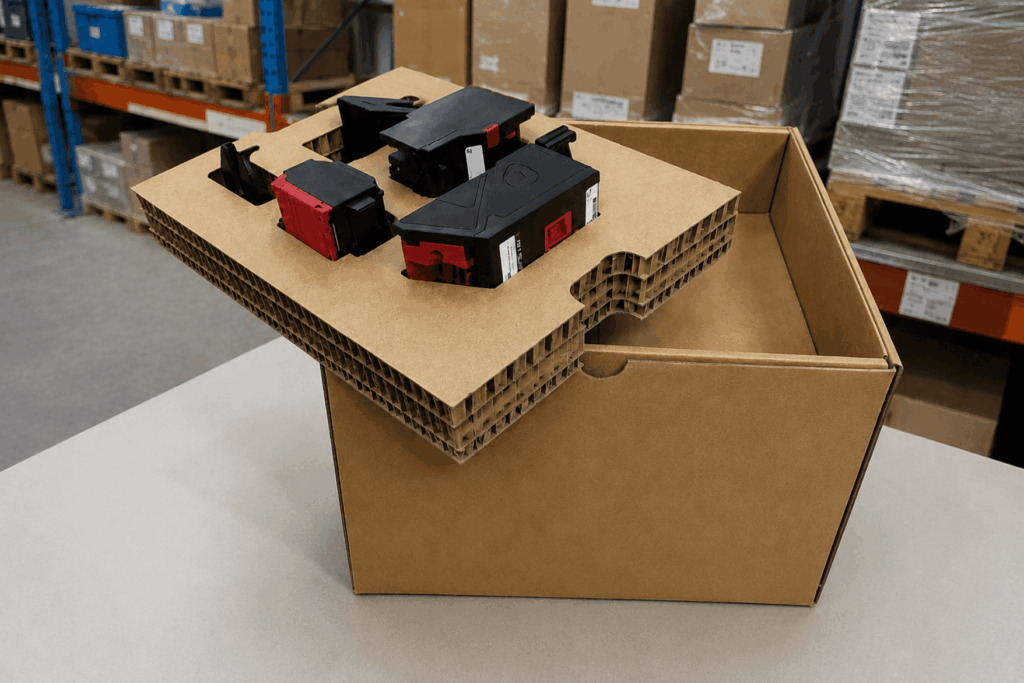
Honeycomb cardboard consists of a hexagonal core positioned between two cardboard surfaces.
This structure creates small cells that work together to absorb impacts, distribute forces and increase compression resistance.
The result is a lightweight yet surprisingly strong material.
Why is it becoming more popular?
There are several reasons for the growing adoption of this solution across different industrial sectors:
Reduced weight
Compared with wooden solutions and other rigid materials, honeycomb cardboard can deliver high levels of strength with less weight.
This can result in lower transport and handling costs.
Sustainability
Produced from recyclable paper, it helps reduce the use of less sustainable materials and makes recycling easier at the end of its life cycle.
Versatility
It can be used for:
- Furniture protection
- Internal dividers
- Structural reinforcement
- Surface protection
- Made-to-measure industrial packaging
Compression resistance
Despite its low weight, it offers excellent load-bearing capacity and is often used in applications requiring a high degree of stability.
In which sectors is it most commonly used?
Honeycomb cardboard is increasingly common in industries such as:
- Furniture
- Automotive
- Household appliances
- Logistics
- Export
- E-commerce
Its combination of strength, lightness and sustainability enables it to meet the current demands of the supply chain.
As companies seek more efficient and responsible solutions, honeycomb cardboard continues to establish itself as a modern alternative to traditional protective materials, helping reduce damage, optimise logistics costs and improve the overall performance of packaging.
Contact us and discover how we can help you find the ideal packaging solution for your business.